
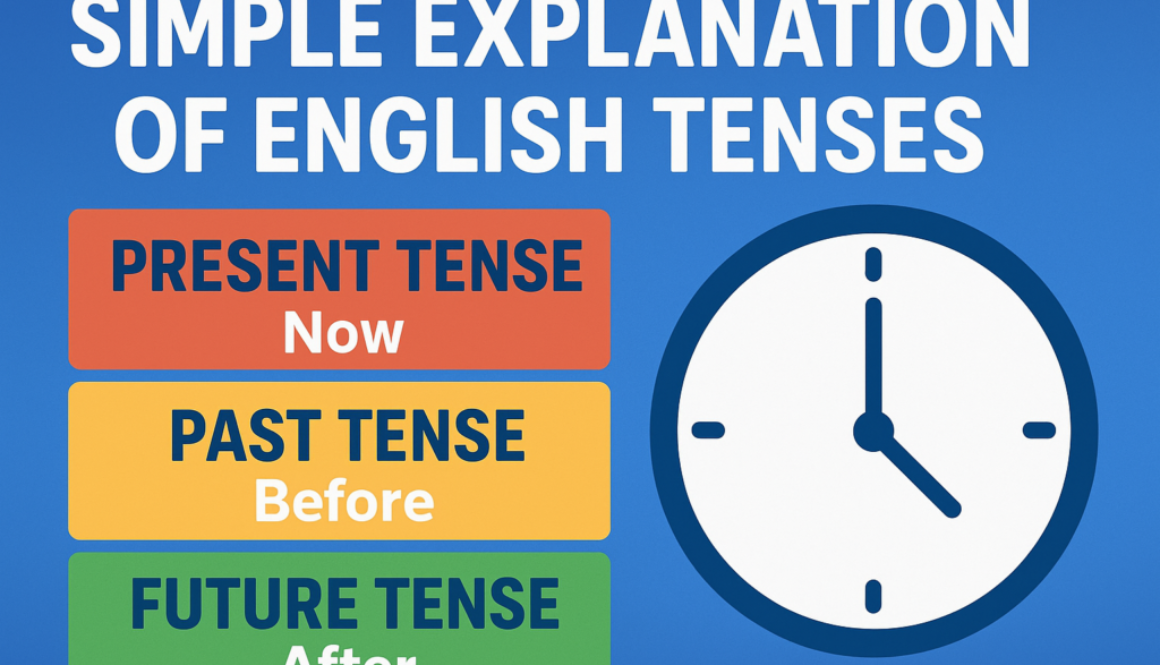
Simple Explanation of English Tenses — Complete Guide
🟦 1. Present Tenses
A. Simple Present Tense
We use it for:
✔ habits
✔ facts
✔ routines
✔ general truths
Examples:
I eat breakfast at 7.
She works in a bank.
B. Present Continuous Tense
Used for:
✔ actions happening now
✔ temporary actions
✔ actions in progress
Examples:
I am studying English now.
They are watching TV at the moment.
C. Present Perfect Tense —
Used for:
✔ experiences
✔ actions that started in the past and continue
✔ results in the present
Examples:
I have visited Spain.
She has worked here for five years.
D. Present Perfect Continuous Tense — Used for:
✔ actions that started in the past and are still continuing
✔ focus on duration
Examples:
I have been studying English for 2 hours.
They have been working all day.
🟧 2. Past Tenses
A. Simple Past Tense
Used for:
✔ finished actions in the past
✔ specific time
Examples:
I visited Paris last year.
She worked yesterday.
B. Past Continuous Tense
Used for:
✔ actions happening in the past at a specific time
✔ interrupted actions
Examples:
I was studying when he called.
They were playing football at 6 pm.
C. Past Perfect Tense
Used for:
✔ an action that happened before another past action
Examples:
She had left before I arrived.
I had finished dinner before the movie started.
D. Past Perfect Continuous Tense
Used for:
✔ longer actions before another past action
Examples:
I had been studying for two hours before the exam started.
They had been working for months before the project ended.
🟩 3. Future Tenses (Clear SEO Explanation)
A. Simple Future Tense (will)
Used for:
✔ predictions
✔ promises
✔ decisions made now
Examples:
I will help you.
It will rain tomorrow.
B. Future Continuous Tense
Used for:
✔ actions happening at a specific future time
Examples:
I will be traveling next week.
She will be working at 10 am.
C. Future Perfect Tense
Used for:
✔ actions completed before a future time
Examples:
I will have finished by tomorrow.
They will have left before noon.
D. Future Perfect Continuous Tense —
Used for:
✔ long actions continuing until a point in the future
Examples:
I will have been studying for 3 hours by 8 pm.
She will have been working here for 10 years next month.
🌟 Summary: The Easiest Way to Understand English Tenses
To understand tenses quickly:
Present = now
Past = before now
Future = after now
Simple = general
Continuous = in progress
Perfect = completed
Perfect continuous = long action + duration