
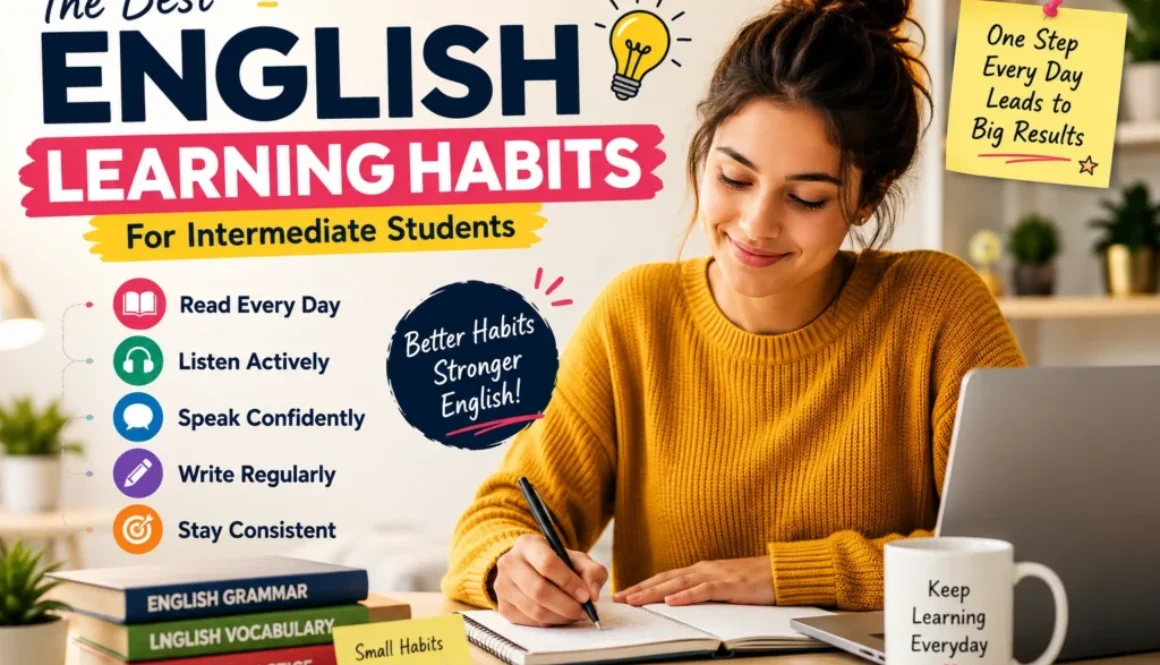
The Best English Learning Habits for Intermediate Students to Improve Fluency Fast
The Best English Learning Habits for Intermediate Students
Many English learners reach the intermediate level and then feel stuck. They understand basic conversations, know common vocabulary, and can communicate in everyday situations. However, moving from intermediate to advanced English often feels difficult.
The good news is that you do not need special talent to become fluent. You simply need the right English learning habits.
In this guide, you will discover the best habits that successful English learners use every day to improve their speaking, listening, reading, writing, vocabulary, and pronunciation skills.
This English book is perfect for students who want to improve speaking, listening, vocabulary, and pronunciation at home https://amzn.to/4vghGJF
Why Learning Habits Matter
Learning English is not about studying for ten hours one day and then doing nothing for a week.
Successful learners improve because they practice English consistently.
Small daily habits create big results over time.
For example:
- 20 minutes every day = 140 minutes per week
- 30 minutes every day = 210 minutes per week
- 1 hour every day = 365 hours per year
Consistency is more important than intensity.
This English book is perfect for students who want to improve speaking, listening, vocabulary, and pronunciation at home : https://amzn.to/4dISBkV
1. Read English Every Day
Reading is one of the fastest ways to improve vocabulary and grammar naturally.
Choose materials that match your level:
- English blogs
- News articles
- Short stories
- Novels
- Learning websites
Example
Instead of memorizing the word “challenge,” read it in context:
“Learning English can be a challenge, but practice makes it easier.”
By seeing words in real sentences, you remember them longer.
This English book is perfect for students who want to improve speaking, listening, vocabulary, and pronunciation at home https://amzn.to/4x1yR3m
2. Listen to English Daily
Listening helps your brain become familiar with natural English.
Listen to:
- Podcasts
- YouTube videos
- Audiobooks
- Movies
- TV shows
Example
If you enjoy cooking, watch cooking videos in English.
If you like sports, listen to sports podcasts.
Learning becomes easier when you enjoy the content.
Listening Habit
Spend at least 20 minutes listening to English every day.
This English book is perfect for students who want to improve speaking, listening, vocabulary, and pronunciation at home :https://amzn.to/4u6MAmM
3. Learn Vocabulary in Context
Many students memorize long vocabulary lists.
This method often fails because words are quickly forgotten.
Instead, learn words through sentences.
Example
Word: “Opportunity”
Sentence:
“This job gave me a great opportunity to improve my skills.”
Now you understand how the word is used naturally.
Better Method
Create a vocabulary notebook.
Write:
- New word
- Meaning
- Example sentence
- Your own sentence
- This English book is perfect for students who want to improve speaking, listening, vocabulary, and pronunciation at home :https://amzn.to/4x2nOXO
4. Speak English Every Day
Speaking is the skill that many intermediate students avoid.
The truth is simple:
You cannot become a fluent speaker without speaking.
Practice Ideas
- Talk to language partners
- Join online speaking groups
- Speak to yourself
- Record your voice
Example
Describe your day:
“Today I woke up at seven o’clock. I had breakfast and went to work.”
This simple habit improves fluency and confidence.
SEO Keywords
English speaking practice, improve spoken English, English conversation skills
- This English book is perfect for students who want to improve speaking, listening, vocabulary, and pronunciation at home :https://amzn.to/4x2nOXO
5. Think in English
Many learners translate from their native language into English.
This slows down communication.
Instead, train yourself to think directly in English.
Example
When you see a car, think:
“That car looks expensive.”
When you drink coffee, think:
“This coffee tastes great.”
Small thoughts lead to faster speaking.
6. Keep an English Journal
Writing helps organize your thoughts and improve grammar.
Write a short paragraph every day.
Example
“Today was a productive day. I completed my work and learned five new English words.”
Writing regularly helps you notice mistakes and improve accuracy.
7. Review Vocabulary Regularly
Learning words once is not enough.
Review them several times.
Effective Review Schedule
- Day 1
- Day 3
- Day 7
- Day 14
- Day 30
This method helps move vocabulary into long-term memory.
8. Learn Common Phrases Instead of Single Words
Native speakers often use phrases rather than individual words.
Examples
Instead of learning:
- make
- take
- get
Learn phrases:
- make a decision
- take a break
- get ready
This improves natural communication.
9. Improve Your Pronunciation
Good pronunciation helps others understand you.
Practice Methods
- Shadow native speakers
- Repeat sentences aloud
- Record your voice
- Compare your pronunciation
Example
Listen:
“I’d like a cup of coffee.”
Pause.
Repeat exactly as the speaker says it.
10. Use English in Real Life
The best learning happens when English becomes part of your daily routine.
Ideas
- Change your phone language to English
- Follow English social media pages
- Write shopping lists in English
- Read English emails
The more English surrounds you, the faster you improve.
11. Watch English Videos with Subtitles
YouTube is one of the best tools for English learners.
Start with English subtitles.
Gradually try watching without subtitles.
Example
Watch:
- Educational videos
- Travel vlogs
- Interviews
- Documentaries
This improves listening and vocabulary simultaneously.
12. Learn Grammar Through Usage
Do not spend all your time memorizing grammar rules.
Learn grammar through examples.
Example
Present Perfect:
“I have visited London.”
Past Simple:
“I visited London last year.”
Seeing grammar in real situations makes it easier to understand.
13. Set Weekly English Goals
Goals help maintain motivation.
Examples
This week I will:
- Learn 20 new words
- Read 5 articles
- Watch 3 English videos
- Speak English for 30 minutes
Small goals create steady progress.
14. Practice Active Learning
Do not just watch or listen.
Interact with the content.
Example
After reading an article:
- Summarize it
- Write key points
- Discuss it with someone
Active learning improves retention.
15. Be Patient and Consistent
Many learners quit because they expect fast results.
Language learning is a journey.
Fluency comes from thousands of small learning sessions.
Example
If you improve by only 1% every day, after one year your progress will be enormous.
Keep practicing.
Keep learning.
Keep speaking.
Sample Daily English Learning Routine
Morning (15 Minutes)
- Read an English article
- Learn 5 new words
Afternoon (20 Minutes)
- Listen to a podcast
Evening (20 Minutes)
- Practice speaking
- Write in your journal
Before Bed (10 Minutes)
- Review vocabulary
Total Time: 65 Minutes Daily
This simple routine can dramatically improve your English over time.
Final Thoughts
The best English learning habits for intermediate students are simple but powerful. Reading daily, listening regularly, practicing speaking, learning vocabulary in context, improving pronunciation, and staying consistent will help you move from intermediate to advanced English.
Remember that fluency does not happen overnight. Every article you read, every podcast you listen to, and every conversation you have brings you one step closer to your goal.
Start with one habit today and gradually build a complete English learning routine. Your future fluent self will thank you.