📝 Mastering Possessive Adjectives in English | تعلم صفات الملكية في اللغة الإنجليزية
✅ Introduction – مقدمة
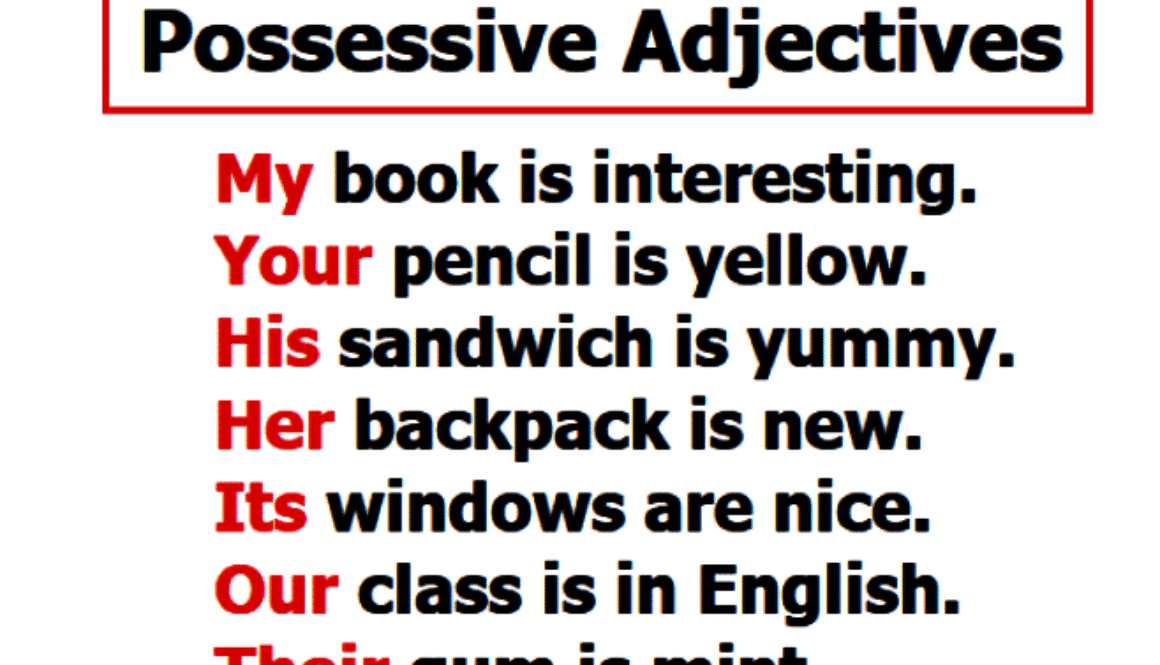
Possessive adjectives are essential in English grammar because they show ownership or possession. They answer the question: “Who does it belong to?”
صفات الملكية في اللغة الإنجليزية مهمة لأنها تُستخدم للدلالة على الملكية أو الانتماء. وهي تُجيب على سؤال: “لمن هذا الشيء؟”
📚 What Are Possessive Adjectives?
ما هي صفات الملكية؟
In English, we use possessive adjectives before a noun to show who owns something.
نستخدم صفات الملكية في اللغة الإنجليزية قبل الاسم للدلالة على من يملك هذا الشيء.
Subject Pronoun
Possessive Adjective
Arabic Translation
I
my
لي / ملكي
You
your
لك / ملكك
He
his
له / ملكه
She
her
لها / ملكها
It
its
له / لها (لغير العاقل)
We
our
لنا / ملكنا
They
their
لهم / ملكهم
✨ Examples of Possessive Adjectives with Emojis
أمثلة على صفات الملكية مع الرموز التعبيرية:
My book is on the table. 📘 كتابي على الطاولة.
Your phone is ringing. 📱 هاتفك يرن.
His car is very fast. 🚗 سيارته سريعة جدًا.
Her dress is beautiful. 👗 فستانها جميل.
The cat licked its paw. 🐱 القط لعق قدمه.
Our house is big and comfortable. 🏡 منزلنا كبير ومريح.
Their children are playing in the park. 🎠 أطفالهم يلعبون في الحديقة.
⚠️ Important Notes
ملاحظات مهمة:
Possessive adjectives are always followed by a noun. صفات الملكية دائمًا يتبعها اسم.
✅ Correct: This is my bag. ❌ Incorrect: This is mine bag.
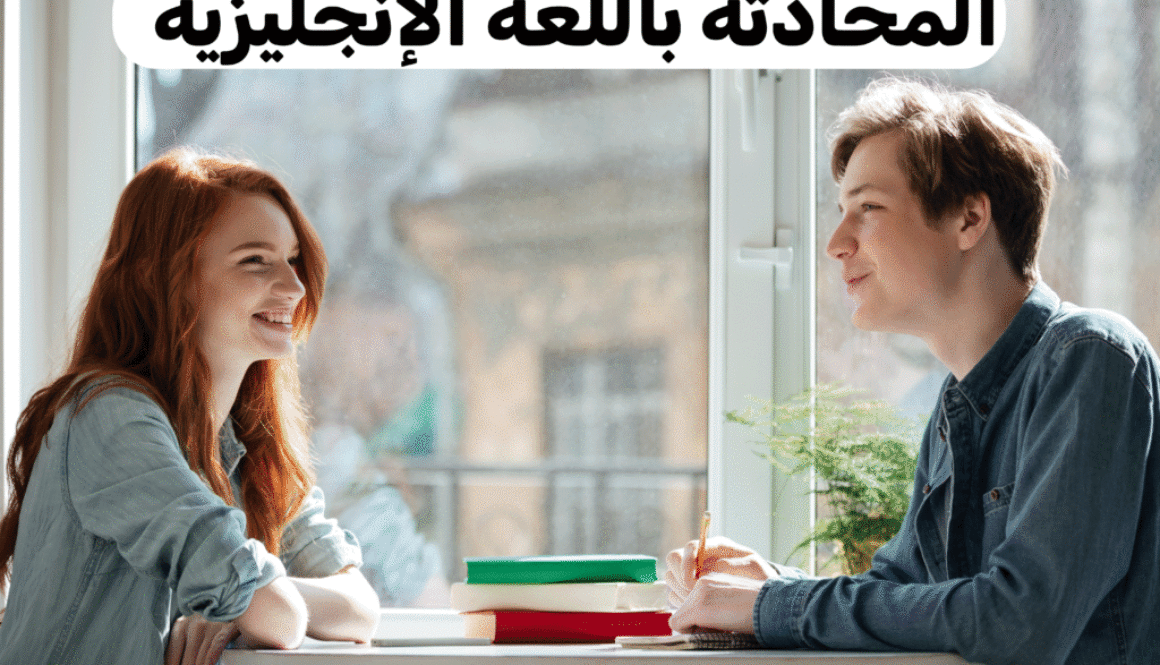
💬 Short Conversation Using Possessive Adjectives
محادثة قصيرة باستخدام صفات الملكية:
Ali: Hi Sara! Is this your pen? مرحبًا سارة! هل هذا قلمك؟
Sara: No, it’s not my pen. I think it’s his. لا، هذا ليس قلمي. أعتقد أنه قلمه.
Ali: Oh, you’re right! It’s his handwriting. أوه، معك حق! هذه خط يده.
Sara: Where is our homework notebook? أين دفتر الواجب المنزلي الخاص بنا؟
Ali: I left it in our classroom. Let’s go get it! تركته في فصلنا. هيا نذهب لنحضره!
🎯 Conclusion – الخلاصة
Possessive adjectives are small words but play a big role in English grammar. By practicing them daily, you’ll quickly improve your speaking and writing.
صفات الملكية كلمات صغيرة لكن لها دور كبير في قواعد اللغة الإنجليزية. ومع التدريب اليومي، ستتحسن مهاراتك في التحدث والكتابة بسرعة.
Keywords: present perfect, English grammar, tense examples, learn English, المضارع التام, شرح الأزمنة, قواعد اللغة الإنجليزية، تعلم اللغة الإنجليزية
📌 What is the Present Perfect Tense?
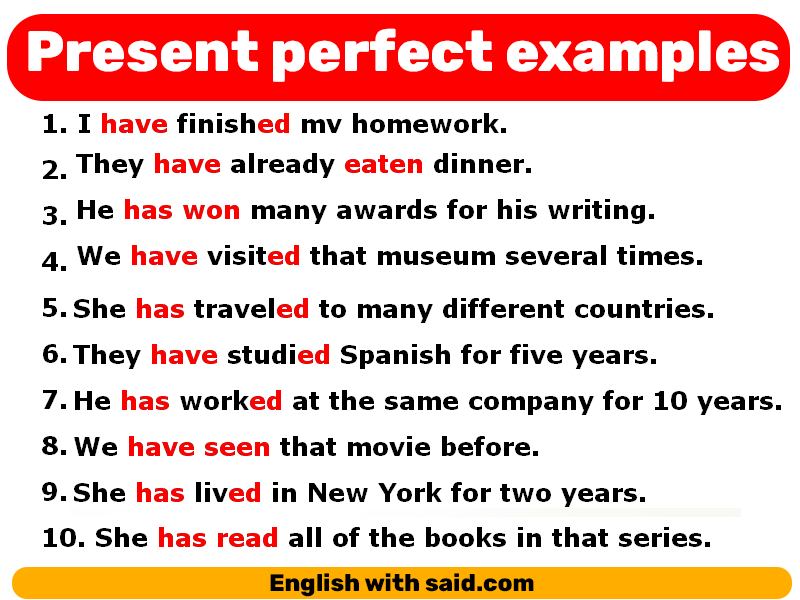
The present perfect tense connects the past to the present. It describes actions that happened at an unspecified time or started in the past and still continue.
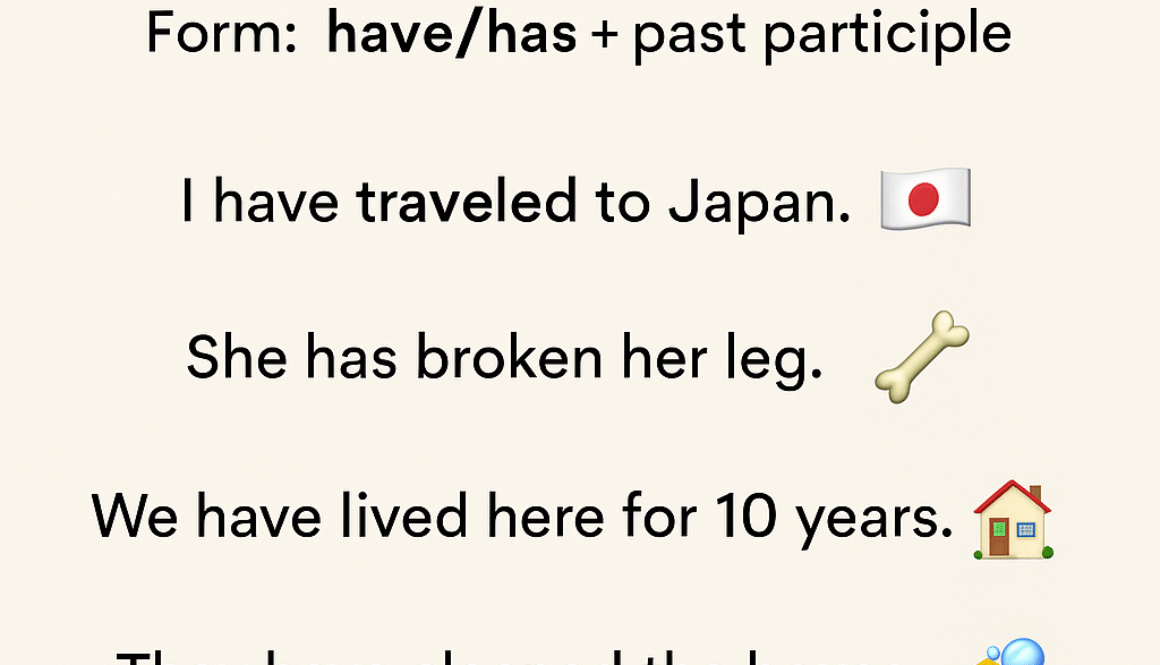
🟢 Form: have/has + past participle
I have eaten 🍕
She has visited Paris 🗼
📚 استخدامات المضارع التام (Present Perfect)
✅ To describe experiences (لوصف التجارب):
I have traveled to Japan. 🇯🇵 لقد سافرت إلى اليابان.
✅ To describe actions with results in the present (أفعال نتيجتها في الحاضر):
She has broken her leg. 🦴 لقد كسرت ساقها.
✅ To describe actions that started in the past and continue (بدأت في الماضي وما زالت مستمرة):
We have lived here for 10 years. 🏡 لقد عشنا هنا لمدة 10 سنوات.
🧱 تركيب زمن المضارع التام:
Subject
have/has
Past Participle
Example
I/You/We/They
have
eaten
I have eaten lunch. 🍽️
He/She/It
has
gone
She has gone to school. 🎒
✅ لاحظ:
نستخدم “has” مع المفرد (He, She, It).
نستخدم “have” مع الجمع (I, You, We, They).
الفعل في التصريف الثالث (Past Participle).
✨ أمثلة على زمن المضارع التام (With Emojis):
They have cleaned the house. 🧼 قاموا بتنظيف المنزل.
He has never seen a tiger. 🐅 لم يرَ نمرًا من قبل.
We have finished our homework. 📚 لقد أنهينا واجبنا.
I have just eaten. 🍕 لقد أكلت للتو.
❌ النفي في زمن المضارع التام:
Form: Subject + have/has not + past participle
I haven’t watched the movie. 🎥 لم أشاهد الفيلم.
She hasn’t finished her work. 🖥️ لم تنهِ عملها.
❓الأسئلة في المضارع التام:
Form: Have/Has + subject + past participle?
Have you been to Italy? 🇮🇹 هل زرت إيطاليا؟
Has he called you? ☎️ هل اتصل بك؟
💬 Conversation using Present Perfect
👩 Sarah and 👨 Mark
👨 Mark: Hi Sarah! You look happy today 😊 مرحباً سارة! تبدين سعيدة اليوم 😊
👩 Sarah: Yes! I have passed my English test! 🎉 نعم! لقد نجحت في اختبار اللغة الإنجليزية! 🎉
👨 Mark: That’s great! Have you studied a lot? 📖 رائع! هل ذاكرت كثيراً؟
👩 Sarah: Yes, I have read all the grammar lessons. 📚 نعم، قرأت جميع دروس القواعد.
👨 Mark: Have you ever visited London? 🇬🇧 هل سبق لك أن زرت لندن؟
👩 Sarah: No, I haven’t, but I’d love to go someday. ✈️ لا، لم أزرها، لكن أحب أن أذهب يوماً ما.
📝 تمرين سريع:
❓Fill in the blanks with the present perfect tense:
Learn the Present Simple of the Verb “To Be” — with Arabic Translation
✅ Present Simple Grammar Made Easy
🧒🏼 تعلم زمن المضارع البسيط للفعل “To Be” بطريقة مبسطة
🔍 What is the verb “to be”?
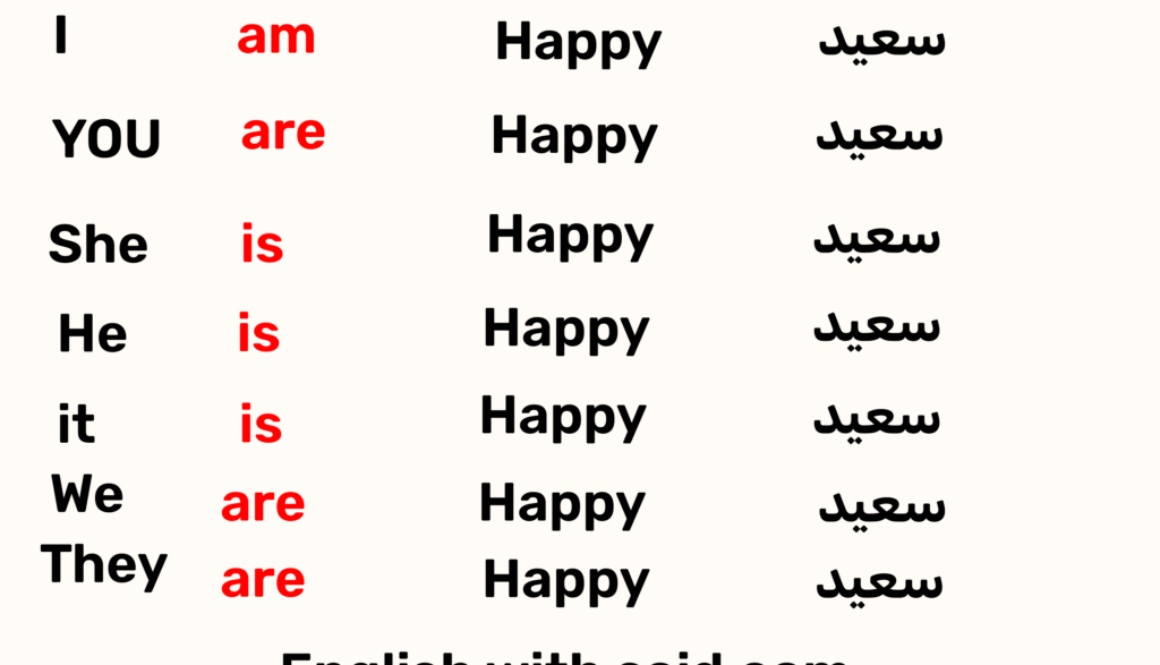
The verb “to be” is one of the most common verbs in English. In the present simple, it changes depending on the subject. In English, we use:
am with “I”
is with “he”, “she”, “it”
are with “you”, “we”, “they”
✨ Positive Sentences – الجمل المثبتة
I am a student. 🎓 أنا طالب.
You are very kind. 😊 أنت لطيف جدًا.
He is my brother. 👦 هو أخي.
She is my teacher. 👩🏫 هي معلمتي.
It is a cat. 🐱 إنه قط.
We are friends. 🤝 نحن أصدقاء.
They are at home. 🏠 هم في المنزل.
❌ Negative Sentences – الجمل المنفية
I am not tired. 😴 أنا لست متعبًا.
You are not late. ⏰ أنت لست متأخرًا.
He is not here. 🚫 هو ليس هنا.
She is not sad. 😢 هي ليست حزينة.
It is not my book. 📕 هذا ليس كتابي.
We are not ready. ❗ نحن لسنا جاهزين.
They are not in class. 🏫 هم ليسوا في الصف.
❓ Questions – الأسئلة
Am I your friend? 🤔 هل أنا صديقك؟
Are you happy? 😀 هل أنت سعيد؟
Is he a doctor? 🧑⚕️ هل هو طبيب؟
Is she a student? 👧 هل هي طالبة؟
Is it your dog? 🐶 هل هو كلبك؟
Are we late? ⌛ هل نحن متأخرون؟
Are they at the park? 🌳 هل هم في الحديقة؟
🗣️ Short Conversation Using “To Be”
محادثة بسيطة باستخدام الفعل “to be”
👦 Youssef: Hello! Are you new here? 👋 مرحبًا! هل أنت جديد هنا؟
👧 Sara: Yes, I am. My name is Sara. 😊 نعم، أنا كذلك. اسمي سارة.
👦 Youssef: Nice to meet you. I am Youssef. تشرفت بلقائك. أنا يوسف.
👧 Sara: Is he your friend? 👀 هل هو صديقك؟
👦 Youssef: Yes, he is. We are classmates. نعم، هو كذلك. نحن زملاء في الصف.
📌 Summary
The verb “to be” is simple and powerful. It helps you speak about names, feelings, jobs, places, and more. Use am, is, and are every day to build strong English sentences.
الفعل “to be” بسيط ومهم جدًا. يساعدك على التحدث عن الأسماء، والمشاعر، والوظائف، والأماكن. استخدم am وis وare كل يوم لتكوين جمل إنجليزية قوية.
🌟 Present Perfect Tense in English | زمن المضارع التام 🌟
🔹 What is the Present Perfect Tense?
🔸 The present perfect is used to show that an action happened at an unspecified time before now. 🔸 It connects the past with the present.
❗ Structure:
✅ Subject + have/has + past participle (V3)
🧠 Examples:
I have eaten. 🍽️ لقد أكلت.
She has gone to school. 🏫 لقد ذهبت إلى المدرسة.
🕐 When do we use the Present Perfect?
1. ✅ To talk about experiences
🗣️ We use it to describe something that has happened in our life.
Examples:
I have visited Paris. 🗼 لقد زرت باريس.
He has never tried sushi. 🍣 لم يجرب السوشي من قبل.
2. 📍 To talk about recent actions
🕑 When the action just happened and has an effect now.
Examples:
I have just finished my homework. 📚 لقد أنهيت واجبي للتو.
They have lost their keys. 🔑 لقد فقدوا مفاتيحهم.
3. 📆 To talk about actions with “for” and “since”
📌 We use “for” to talk about a period of time, and “since” for a point in time.
Examples:
I have lived here for five years. 🏡 لقد عشت هنا لمدة خمس سنوات.
She has worked here since 2020. 🏢 لقد عملت هنا منذ عام 2020.
❓ Keywords used with the Present Perfect
💡 These words often appear:
Already ✅
Just ✨
Yet ❓
Ever 🔁
Never ❌
Since 🕓
For ⏳
✅ More Examples with Translation:
Have you ever seen a lion? 🦁 هل سبق لك أن رأيت أسدًا؟
I have never been to London. 🇬🇧 لم أذهب إلى لندن من قبل.
She has already eaten. 🍕 لقد أكلت بالفعل.
We have just arrived. ✈️ لقد وصلنا للتو.
He hasn’t finished his work yet. ❌💻 لم يُنْهِ عمله بعد.
💬 Conversation using Present Perfect:
👩 Sarah: Have you ever been to Egypt? 🇪🇬 👦 Tom: Yes, I have! I’ve visited the pyramids twice. 🏜️ 👩 سارة: هل سبق لك أن زرت مصر؟ 👦 توم: نعم! لقد زرت الأهرامات مرتين.
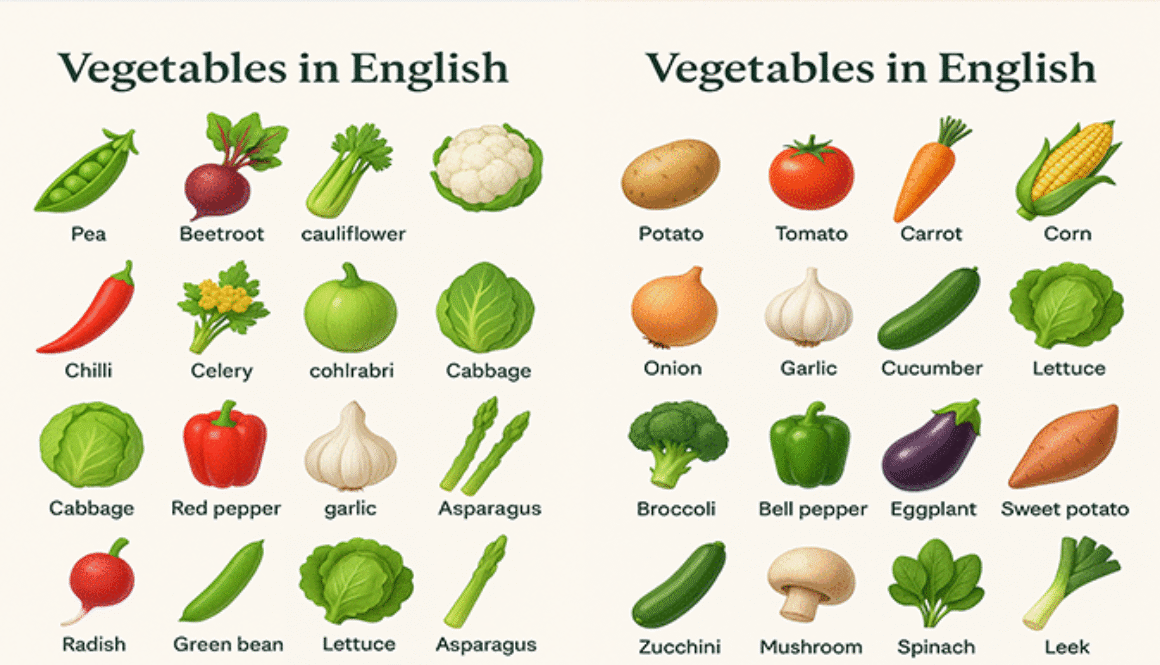
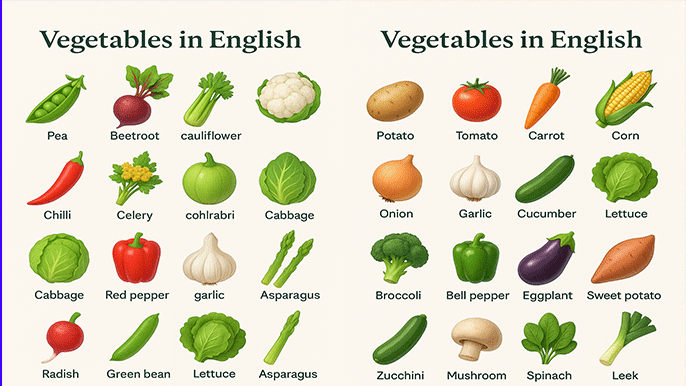
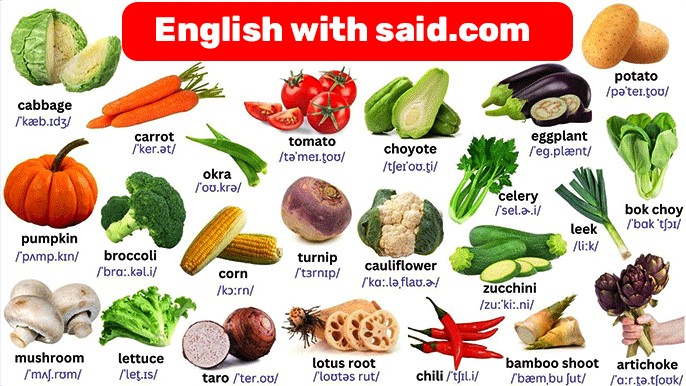
🥦 Vegetables in English – الخضروات بالإنجليزية مع الترجمة والرموز التعبيرية
🥔 Potato – بطاطس
🔹 I like fried potatoes. 🔸 أحب البطاطس المقلية.
🍅 Tomato – طماطم
🔹 She added tomatoes to the salad. 🔸 أضافت الطماطم إلى السلطة.
🥕 Carrot – جزر
🔹 Rabbits love eating carrots. 🔸 الأرانب تحب أكل الجزر.
🌽 Corn – ذرة
🔹 We ate corn on the cob at the picnic. 🔸 أكلنا الذرة في النزهة.
🧅 Onion – بصل
🔹 Cutting onions makes me cry. 🔸 تقطيع البصل يجعلني أبكي.
🧄 Garlic – ثوم
🔹 Garlic is good for your health. 🔸 الثوم مفيد لصحتك.
🥒 Cucumber – خيار
🔹 I like cold cucumber in my salad. 🔸 أحب الخيار البارد في السلطة.
🥬 Lettuce – خس
🔹 Lettuce is the main ingredient in most salads. 🔸 الخس هو المكون الرئيسي في معظم السلطات.
🥦 Broccoli – بروكلي
🔹 Broccoli is rich in vitamins. 🔸 البروكلي غني بالفيتامينات.
🫑 Bell Pepper – فلفل رومي
🔹 She used red and green bell peppers. 🔸 استخدمت الفلفل الرومي الأحمر والأخضر.
🍆 Eggplant – باذنجان
🔹 They cooked eggplant with olive oil. 🔸 طبخوا الباذنجان بزيت الزيتون.
🥔 Sweet Potato – بطاطا حلوة
🔹 Sweet potatoes are delicious when baked. 🔸 البطاطا الحلوة لذيذة عند خبزها.
🥒 Zucchini – كوسا
🔹 We grilled zucchini for dinner. 🔸 قمنا بشواء الكوسا على العشاء.
🍄 Mushroom – فطر
🔹 Mushrooms grow in dark places. 🔸 ينمو الفطر في الأماكن المظلمة.
🥗 Spinach – سبانخ
🔹 Spinach is full of iron. 🔸 السبانخ مليئة بالحديد.
🧄 Leek – كراث
🔹 Leeks are used in soups. 🔸 يُستخدم الكراث في الشوربة.
🌶 Chili Pepper – فلفل حار
🔹 Be careful, the chili is very hot! 🔸 كن حذراً، الفلفل الحار حار جداً!
🌰 Turnip – لفت
🔹 Turnips grow well in cold weather. 🔸 ينمو اللفت جيدًا في الطقس البارد.
🥬 Cabbage – ملفوف
🔹 Cabbage soup is healthy. 🔸 شوربة الملفوف صحية.
🥬 Kale – كرنب أجعد
🔹 Kale is often used in green smoothies. 🔸 يُستخدم الكرنب الأجعد في العصائر الخضراء.
🥬 Swiss Chard – سلق
🔹 Swiss chard is a leafy green vegetable. 🔸 السلق نبات ورقي أخضر.
🥗 Conversation – محادثة بسيطة:
👩: Do you like vegetables? 👨: Yes, I eat broccoli, spinach, and sweet potatoes every day. 👩: What about chili peppers? 👨: No, they are too spicy for me.
👩: هل تحب الخضروات؟ 👨: نعم، آكل البروكلي، السبانخ، والبطاطا الحلوة كل يوم. 👩: وماذا عن الفلفل الحار؟ 👨: لا، فهو حار جدًا بالنسبة لي.
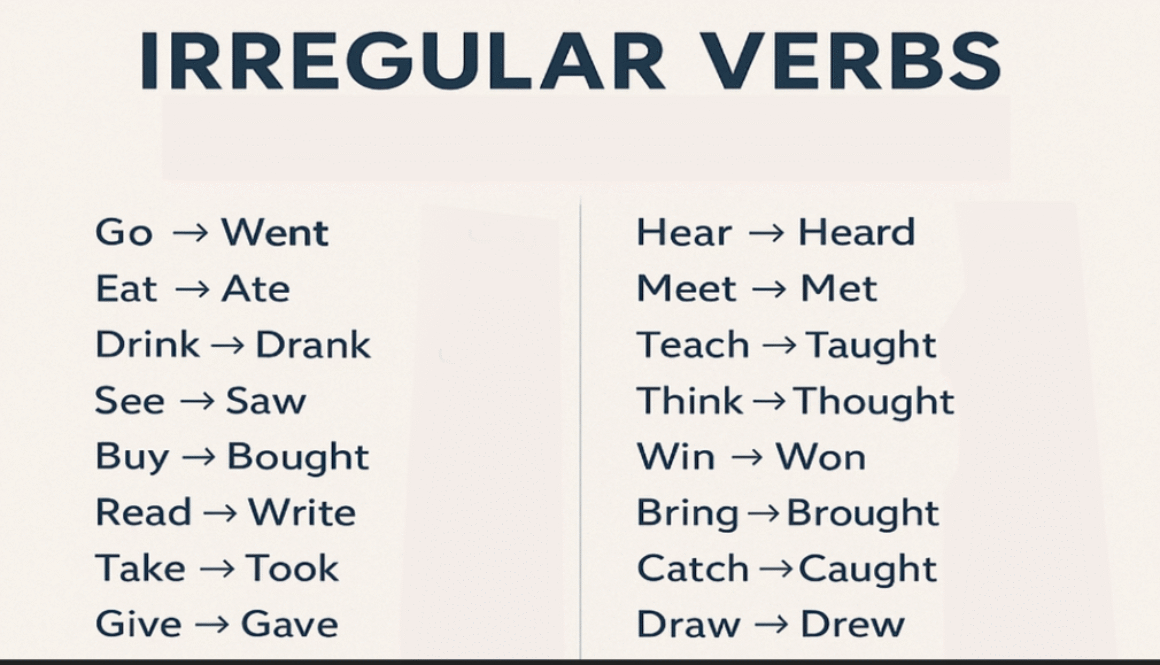
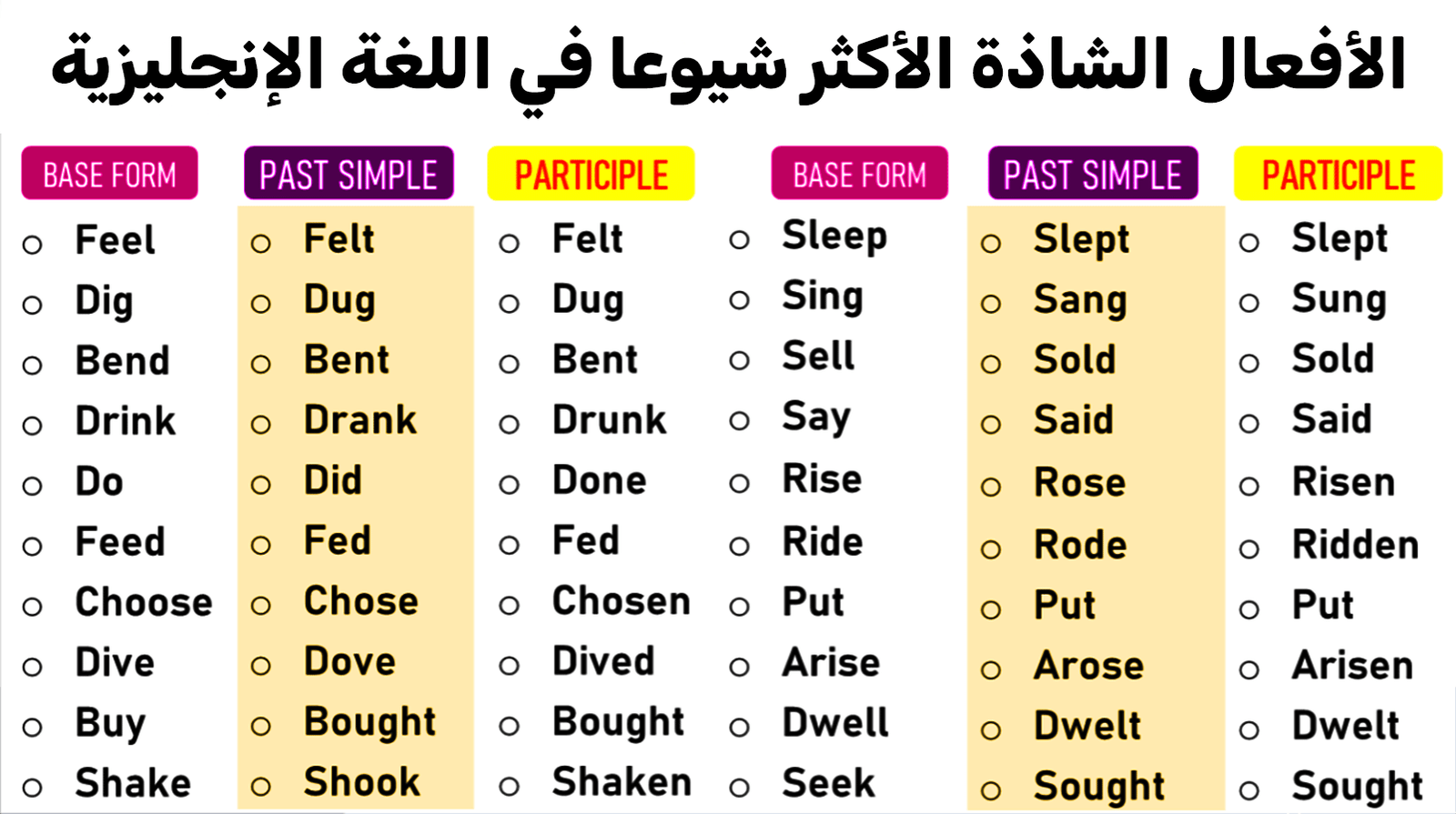
📘 50 Irregular Verbs in the Simple Past with Arabic Translation
٥٠ فعلًا غير منتظم في الماضي مع الترجمة والأمثلة
🔤 What Are Irregular Verbs? | تعريف الأفعال غير المنتظمة
English Definition of irregular verbs : Irregular verbs are common English verbs that do not follow the regular -ed pattern when used in the simple past tense or past participle. These verbs are important in daily English conversations, grammar lessons, and English speaking practice. Examples include go → went, eat → ate, and see → saw. Learning irregular verbs helps you speak and write English correctly.
1. Go → Went
ذهب Sentence: I went to the market. ذهبت إلى السوق.
2. Eat → Ate
أكل Sentence: She ate lunch at noon. أكلت الغداء عند الظهر.
3. Drink → Drank
شرب Sentence: He drank orange juice. شرب عصير البرتقال.
4. See → Saw
رأى Sentence: We saw a rainbow. رأينا قوس قزح.
5. Buy → Bought
اشترى Sentence: I bought a new phone. اشتريت هاتفًا جديدًا.
6. Read → Read (same spelling, different pronunciation)
قرأ Sentence: He read the newspaper. قرأ الصحيفة.
7. Write → Wrote
كتب Sentence: She wrote a story. كتبت قصة.
8. Take → Took
أخذ Sentence: He took my book. أخذ كتابي.
9. Give → Gave
أعطى Sentence: She gave me a gift. أعطتني هدية.
10. Sleep → Slept
نام Sentence: He slept all day. نام طوال اليوم.
11. Begin → Began
بدأ Sentence: The class began at 8. بدأ الدرس الساعة ٨.
12. Run → Ran
ركض Sentence: She ran to school. ركضت إلى المدرسة.
13. Come → Came
جاء Sentence: He came home late. جاء إلى المنزل متأخرًا.
14. Have → Had
كان لديه Sentence: I had breakfast early. تناولت الفطور مبكرًا.
15. Say → Said
قال Sentence: She said hello. قالت مرحبًا.
16. Make → Made
صنع Sentence: He made a cake. صنع كعكة.
17. Stand → Stood
وقف Sentence: They stood in a line. وقفوا في صف.
18. Find → Found
وجد Sentence: She found her wallet. وجدت محفظتها.
19. Leave → Left
غادر Sentence: He left the house. غادر المنزل.
20. Feel → Felt
شعر Sentence: I felt tired. شعرت بالتعب.
21. Hear → Heard
سمع Sentence: She heard a noise. سمعت صوتًا.
22. Meet → Met
قابل Sentence: I met my old friend. قابلت صديقي القديم.
23. Teach → Taught
درّس Sentence: He taught us math. درّس لنا الرياضيات.
24. Think → Thought
فكّر Sentence: I thought about you. فكرت بك.
25. Win → Won
فاز Sentence: They won the game. فازوا بالمباراة.
26. Bring → Brought
أحضر Sentence: She brought her lunch. أحضرت غداءها.
27. Catch → Caught
أمسك Sentence: He caught the ball. أمسك الكرة.
28. Draw → Drew
رسم Sentence: She drew a flower. رسمت زهرة.
29. Drive → Drove
قاد Sentence: I drove to work. قدت إلى العمل.
30. Fall → Fell
سقط Sentence: He fell on the stairs. سقط على الدرج.
31. Fly → Flew
طار Sentence: The bird flew away. طار الطائر بعيدًا.
32. Grow → Grew
نمى Sentence: The plant grew fast. نمت النبتة بسرعة.
33. Know → Knew
عرف Sentence: I knew the answer. عرفت الجواب.
34. Lie → Lay
استلقى Sentence: He lay on the sofa. استلقى على الأريكة.
35. Lose → Lost
فقد Sentence: She lost her phone. فقدت هاتفها.
36. Ride → Rode
ركب Sentence: He rode a bicycle. ركب دراجة.
37. Say → Said
قال Sentence: She said goodbye. قالت وداعًا.
38. Sell → Sold
باع Sentence: They sold their car. باعوا سيارتهم.
39. Send → Sent
أرسل Sentence: I sent an email. أرسلت بريدًا إلكترونيًا.
40. Sit → Sat
جلس Sentence: He sat on the chair. جلس على الكرسي.
41. Speak → Spoke
تحدث Sentence: I spoke to the manager. تحدثت إلى المدير.
42. Steal → Stole
سرق Sentence: Someone stole my bike. سرق أحدهم دراجتي.
43. Swim → Swam
سبح Sentence: She swam in the pool. سبحت في المسبح.
44. Tell → Told
أخبر Sentence: He told me a story. أخبرني بقصة.
45. Think → Thought
فكر Sentence: I thought it was easy. ظننت أنه سهل.
46. Understand → Understood
فهم Sentence: She understood the lesson. فهمت الدرس.
47. Wake → Woke
استيقظ Sentence: I woke up at 6. استيقظت الساعة 6.
48. Wear → Wore
لبس Sentence: He wore a jacket. لبس سترة.
49. Win → Won
فاز Sentence: She won the race. فازت في السباق.
50. Break → Broke
كسر Sentence: He broke the window. كسر النافذة.
👩🦰 Sara and 👨🦱 Adam – Talking About Their Weekend
Sara: Hi Adam! How was your weekend? مرحبًا آدم! كيف كانت عطلتك الأسبوعية؟
Adam: It was great! I went to the beach. كانت رائعة! ذهبت إلى الشاطئ.
Sara: Wow! Did you swim there? رائع! هل سبحت هناك؟
Adam: Yes, I swam for two hours. Then I ate lunch with my friends. نعم، سبحت لمدة ساعتين. ثم أكلت الغداء مع أصدقائي.
Sara: That sounds fun. I stayed home and read a new book. يبدو ممتعًا. بقيت في المنزل وقرأت كتابًا جديدًا.
Adam: Nice! What book did you read? جميل! ما هو الكتاب الذي قرأتِه؟
Sara: It was a story about a boy who found a treasure. كانت قصة عن ولد وجد كنزًا.
Adam: Interesting! I also took many photos at the beach. مثير للاهتمام! التقطت أيضًا العديد من الصور على الشاطئ.
Sara: Did you bring your camera? هل أحضرتَ الكاميرا الخاصة بك؟
Adam: Yes, I brought it with me. And I met some new people too. نعم، أحضرتها معي. وقابلت بعض الأشخاص الجدد أيضًا.
Sara: That’s awesome! I wrote in my journal about my weekend. رائع! كتبت في مذكرتي عن عطلتي الأسبوعية.
Adam: Great! Maybe next time we can go out together. رائع! ربما في المرة القادمة يمكننا الخروج معًا.
تعلم قاعدة المستقبل البسيط باستخدام “Will” – شرح مفصل مع أمثلة وحوار
ما هو زمن المستقبل البسيط؟
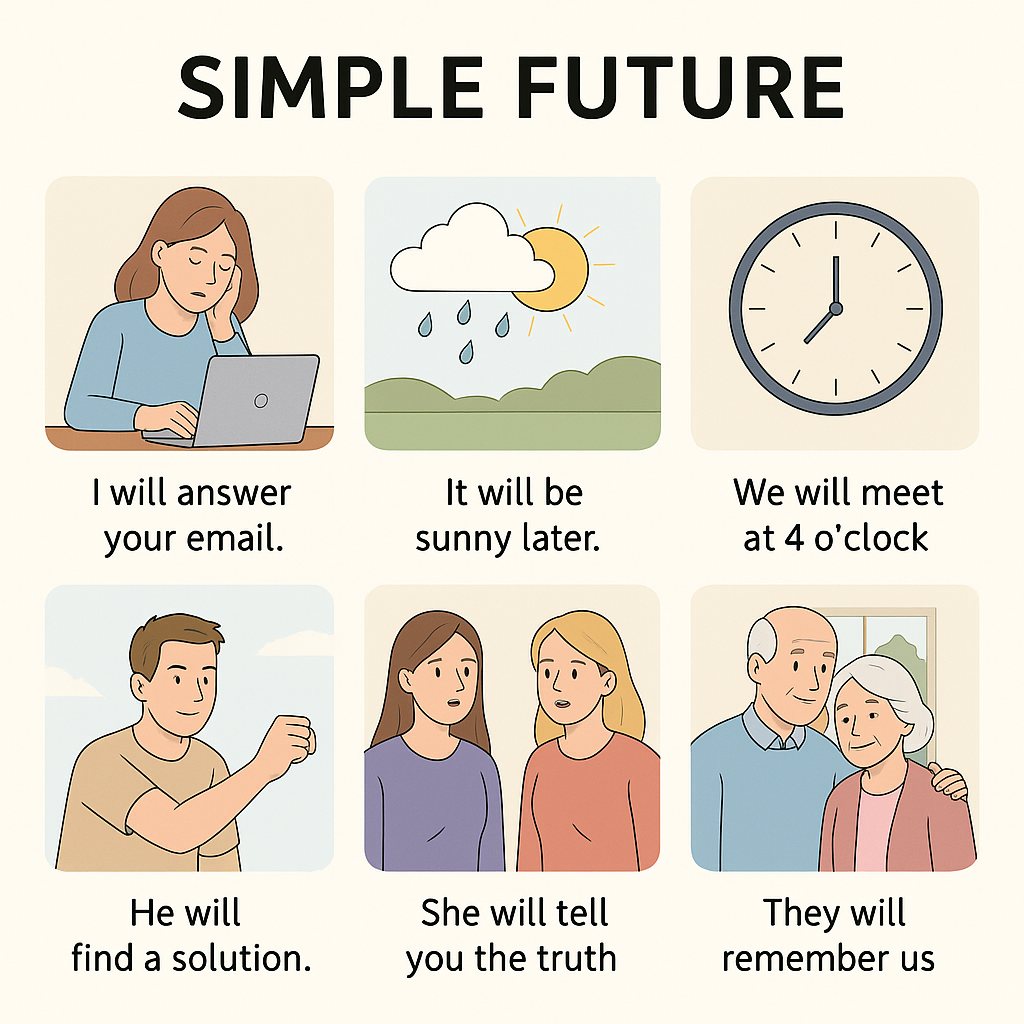
زمن المستقبل البسيط (Simple Future Tense) يُستخدم للتعبير عن أحداث أو أفعال ستحدث في المستقبل. غالبًا ما نستخدم كلمة “will” للتعبير عن هذا الزمن.
كيف نُكوِّن جملة في زمن المستقبل البسيط؟
✅ القاعدة العامة:
النوع
القاعدة
مثال
الترجمة
الجملة المثبتة
Subject + will + base verb
I will travel tomorrow
سأسافر غدًا.
النفي
Subject + will not (won’t) + base verb
She won’t go to the party.
لن تذهب إلى الحفلة.
السؤال
Will + subject + base verb?
Will you help me?
هل ستساعدني؟
ملاحظات مهمة:
“Will” تُستخدم مع جميع الضمائر (I, You, He, She, It, We, They).
“Won’t” هي اختصار لـ “will not”.
الفعل بعد “will” يكون في صورته الأساسية بدون أي إضافات.
أمثلة على المستقبل البسيط باستخدام “will”:
الجملة بالإنجليزية
الترجمة بالعربية
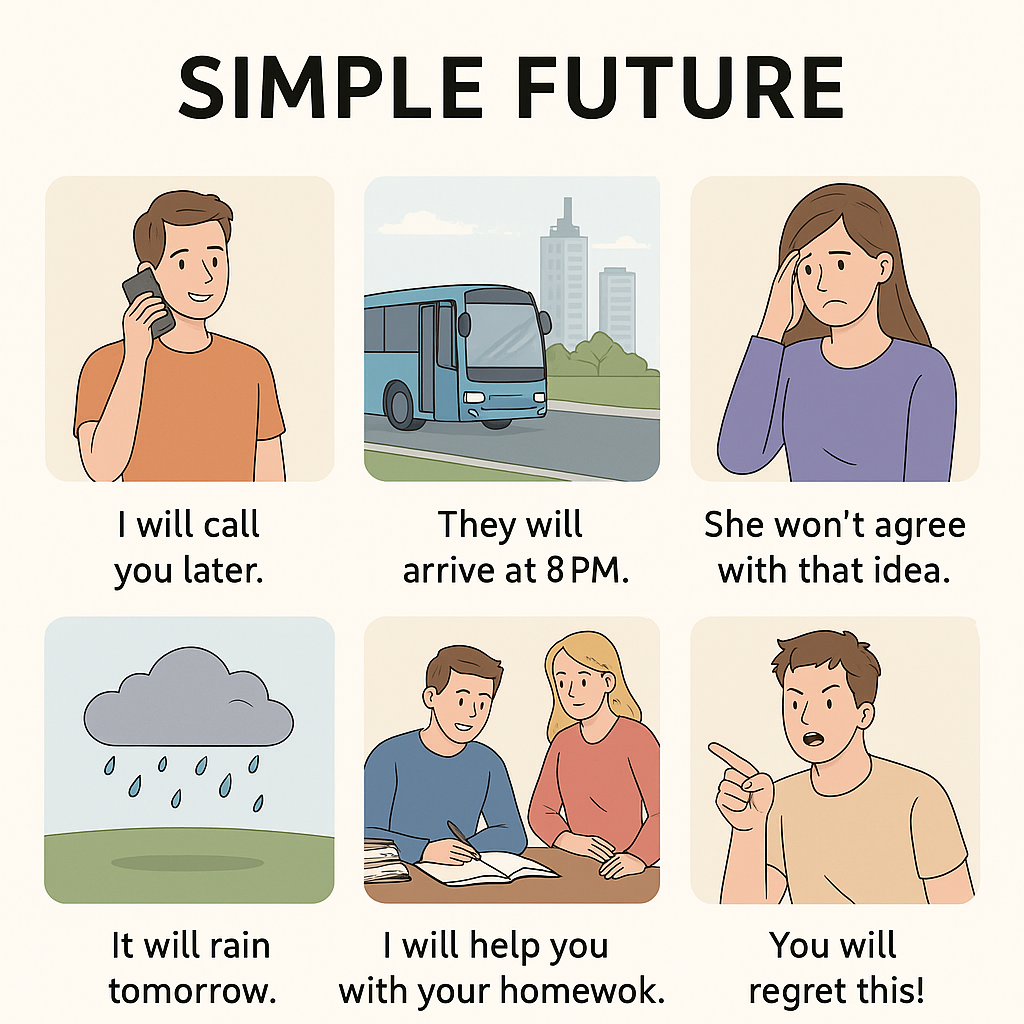
I will call you later.
سأتصل بك لاحقًا.
They will arrive at 8 PM.
سيصلون الساعة الثامنة مساءً.
We will not forget this moment.
لن ننسى هذه اللحظة.
Will he come to the meeting?
هل سيأتي إلى الاجتماع؟
She won’t agree with that idea.
لن توافق على هذه الفكرة.
متى نستخدم “will” في المستقبل البسيط؟
لاتخاذ قرار في لحظة الكلام:
I’m hungry. I will order some food. أنا جائع. سأطلب بعض الطعام.
لتوقعات عن المستقبل:
It will rain tomorrow. ستمطر غدًا.
لوعود أو عروض:
I will help you with your homework. سأساعدك في واجبك.
لتهديد أو تحذير:
You will regret this! ستندم على هذا!
الفرق بين “will” و”going to” (ببساطة):
“Will” تُستخدم أكثر عندما نتخذ قرارًا فجأة.
“Going to” تُستخدم عندما يكون لدينا نية أو خطة مسبقة.
مثال:
I will call him now. (قررت الآن)
I am going to call him. (خططت لذلك مسبقًا)
محادثة قصيرة باستخدام “will”
محادثة بين صديقين يخططان لعطلة نهاية الأسبوع:
Ahmed: What will you do this weekend? أحمد: ماذا ستفعل في عطلة نهاية الأسبوع؟
Sara: I think I will visit my grandparents. سارة: أعتقد أنني سأزور جدي وجدتي.
Ahmed: That sounds nice. Will you stay there overnight? أحمد: يبدو رائعًا. هل ستبقين هناك طوال الليل؟
Sara: Yes, I will. What about you? سارة: نعم، سأفعل. ماذا عنك؟
Ahmed: I will probably go hiking if the weather is good. أحمد: من المحتمل أن أذهب في نزهة إذا كان الطقس جيدًا.
خاتمة
استخدام زمن المستقبل البسيط باستخدام “will” هو أمر ضروري للتحدث عن الخطط، الوعود، والتوقعات. الآن بعد أن تعلمت القاعدة والأمثلة والمحادثة، حاول أن تكتب بعض الجمل بنفسك!
هل أعجبك الدرس؟ شاركه مع أصدقائك وابدأ بتطبيقه في محادثاتك اليومية لتتقن اللغة الإنجليزية بسرعة.
The Present Continuous Tense (also called Present Progressive) is used to describe actions that are happening right now or around the present time. It is formed using: Subject + am/is/are + verb(-ing)
Examples:
I am reading a book.
She is talking on the phone.
They are playing football.
Short Conversation in Present Continuous:
Anna: Hi, Tom! What are you doing? Tom: Hey, Anna! I’m studying for my English test. Anna: Oh really? I’m doing my homework too. Tom: Are you working on the grammar exercises? Anna: Yes, I’m writing some sentences in the present continuous. Tom: That’s great! We’re learning the same thing.
Let me know if you want a version with audio or for kids!