100 Useful English Phrases for Everyday Conversation
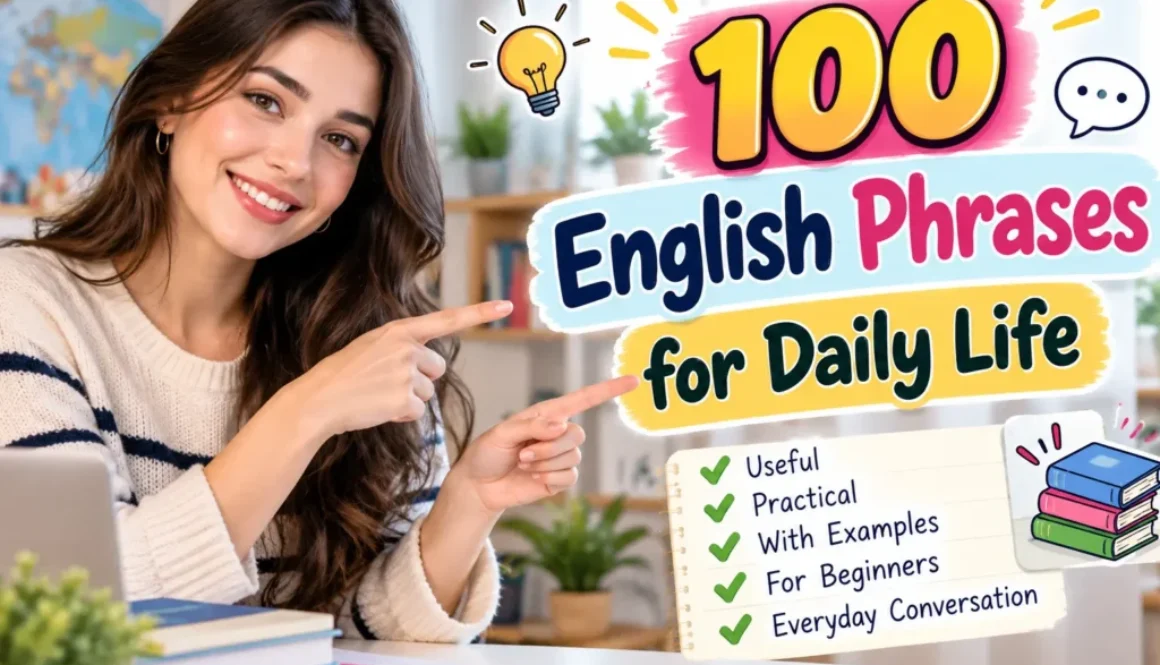
100 English Phrases for Daily Life: Useful Everyday English Phrases for Beginners and Intermediate Learners
Learning English is not only about studying grammar rules and memorizing long vocabulary lists. To communicate naturally, you need to learn common English phrases used in everyday situations.
Whether you are talking to friends, shopping, going to work, meeting new people, asking for help, or simply talking about your day, knowing the right daily English phrases can make communication much easier.
In this article, you will learn 100 English phrases for daily life with simple examples. These expressions are useful for English beginners, intermediate learners, students, travelers, and anyone who wants to speak English more naturally and confidently.
If you are learning English for everyday conversation, try to memorize a few phrases every day and use them in real conversations.
Why Should You Learn English Phrases for Daily Life?
Many English learners know hundreds or even thousands of words but still find it difficult to speak.
Why?
Because native speakers do not always communicate using individual words. They use common expressions and phrases.
For example, instead of learning only the word “busy,” you can learn:
I’m a little busy right now.
Instead of learning only “wait,” learn:
Give me a minute.
These phrases help you communicate faster and more naturally.
Learning common English phrases for daily conversation can help you:
- Speak English more confidently
- Understand everyday conversations
- Improve your listening skills
- Sound more natural
- Communicate while traveling
- Talk to friends and colleagues
- Handle everyday situations in English
100 English Phrases for Daily Life
Below are 100 useful English expressions that you can use in everyday conversations.
1. Good morning.
Meaning: A greeting used in the morning.
Example:
Good morning! How are you today?
2. How are you?
Meaning: A common way to ask someone about their condition.
Example:
Hi, Ahmed. How are you?
3. I’m doing well.
Meaning: You are feeling good.
Example:
A: How are you?
B: I’m doing well, thanks.
4. What’s up?
Meaning: A casual way to ask what someone is doing or how they are.
Example:
Hey, what’s up?
5. How’s your day going?
Meaning: Asking how someone’s day is going.
Example:
Hi! How’s your day going?
6. Nice to meet you.
Meaning: Something you say when you meet someone for the first time.
Example:
Hi, I’m John. Nice to meet you.
7. Long time no see.
Meaning: Used when you meet someone you have not seen for a long time.
Example:
Hey, Sara! Long time no see!
8. See you later.
Meaning: A casual way to say goodbye.
Example:
I have to go now. See you later!
9. Take care.
Meaning: A friendly way to say goodbye.
Example:
See you tomorrow. Take care!
10. Have a nice day.
Meaning: A polite expression used when saying goodbye.
Example:
Thanks for your help. Have a nice day!
Useful English Phrases for Everyday Conversations
11. What are you doing?
Example:
What are you doing this evening?
12. I’m just relaxing.
Example:
I’m just relaxing at home.
13. What do you mean?
Example:
Sorry, what do you mean?
14. I don’t understand.
Example:
Sorry, I don’t understand.
15. Could you repeat that?
Example:
Could you repeat that, please?
16. Can you speak slowly?
Example:
I’m still learning English. Can you speak slowly?
17. What does this mean?
Example:
What does this word mean?
18. How do you say this in English?
Example:
How do you say this in English?
19. Let me think.
Example:
Let me think about it.
20. I’m not sure.
Example:
I’m not sure about the answer.
Common English Phrases for Asking for Help
Knowing how to ask for help is essential when speaking English in daily life.
21. Can you help me?
Example:
Excuse me, can you help me?
22. Could you help me, please?
Example:
Could you help me, please? I can’t find my phone.
23. Can you give me a hand?
Meaning: Can you help me?
Example:
Can you give me a hand with this box?
24. I need some help.
Example:
I need some help with this exercise.
25. Can you show me?
Example:
I don’t know how to use this. Can you show me?
26. Where can I find it?
Example:
Where can I find the bathroom?
27. Could you explain that?
Example:
Could you explain that again?
28. What should I do?
Example:
I’m lost. What should I do?
29. Is there anything I can do?
Example:
You look busy. Is there anything I can do?
30. Thanks for your help.
Example:
Thanks for your help. I really appreciate it.
English Phrases for Shopping and Buying Things
Shopping is another situation where you need simple and practical English.
31. How much is this?
Example:
Excuse me, how much is this shirt?
32. How much does it cost?
Example:
How much does this phone cost?
33. Do you have this in another size?
Example:
Do you have this in another size?
34. Can I try it on?
Example:
Can I try it on?
35. I’m just looking.
Meaning: You are not ready to buy anything.
Example:
A: Can I help you?
B: Thanks, I’m just looking.
36. I’ll take it.
Meaning: You have decided to buy something.
Example:
I like this jacket. I’ll take it.
37. Do you accept credit cards?
Example:
Do you accept credit cards?
38. Can I pay in cash?
Example:
Can I pay in cash?
39. Do you have anything cheaper?
Example:
This is too expensive. Do you have anything cheaper?
40. Can I get a receipt?
Example:
Can I get a receipt, please?
Everyday English Phrases for Work and Study
These phrases are useful at school, university, and work.
41. I’m working on it.
Example:
Don’t worry. I’m working on it.
42. I’ll do it later.
Example:
I’m busy now. I’ll do it later.
43. I’m almost finished.
Example:
I’m almost finished with the report.
44. I need more time.
Example:
I need more time to finish this project.
45. Can you explain this?
Example:
Can you explain this question?
46. I have a question.
Example:
Excuse me, I have a question.
47. That makes sense.
Meaning: You understand something.
Example:
Oh, now I understand. That makes sense.
48. I agree with you.
Example:
I agree with you. That’s a good idea.
49. I don’t agree.
Example:
I’m sorry, but I don’t agree.
50. Let’s get started.
Meaning: Let’s begin.
Example:
Everyone is here. Let’s get started.
English Phrases for Talking About Your Daily Routine
Talking about your daily routine is one of the best ways to practice everyday English.
51. I just woke up.
Example:
I just woke up. I’m still tired.
52. I’m getting ready.
Example:
I’m getting ready for work.
53. I’m running late.
Meaning: You are late or almost late.
Example:
Sorry, I’m running late.
54. I have to go.
Example:
It’s getting late. I have to go.
55. I’ll be back soon.
Example:
I’m going to the store. I’ll be back soon.
56. I’m on my way.
Example:
Don’t worry. I’m on my way.
57. I’m almost there.
Example:
I’m almost there. Give me five minutes.
58. I need a break.
Example:
I’ve been working for three hours. I need a break.
59. I’m tired.
Example:
I’m really tired today.
60. I’m going to bed.
Example:
It’s late. I’m going to bed.
Common English Expressions for Friends and Family
These simple expressions are useful when talking to people you know well.
61. What do you think?
Example:
I want to buy this phone. What do you think?
62. That’s a good idea.
Example:
Let’s go for a walk. That’s a good idea.
63. Sounds good.
Example:
A: Let’s meet at six.
B: Sounds good.
64. No problem.
Example:
A: Sorry I’m late.
B: No problem.
65. Don’t worry.
Example:
Don’t worry. Everything will be okay.
66. Of course.
Example:
A: Can I use your phone?
B: Of course.
67. I agree.
Example:
I think we should leave early.
I agree.
68. That’s true.
Example:
English takes practice. That’s true.
69. You’re right.
Example:
You’re right. I forgot about the meeting.
70. I don’t think so.
Example:
A: Is John coming?
B: I don’t think so.
Useful English Phrases for Restaurants and Cafés
These phrases can help you communicate when eating out.
71. Can I see the menu?
Example:
Excuse me, can I see the menu?
72. I’d like to order.
Example:
I’d like to order, please.
73. I’ll have the chicken.
Example:
I’ll have the chicken and rice.
74. Can I have some water?
Example:
Can I have some water, please?
75. What do you recommend?
Example:
What do you recommend?
76. Is this spicy?
Example:
Is this dish spicy?
77. I’m ready to order.
Example:
I’m ready to order now.
78. Could I have the bill, please?
Example:
Could I have the bill, please?
79. This is delicious.
Example:
Wow! This is delicious.
80. Can I get this to go?
Example:
I’m full. Can I get this to go?
English Phrases for Traveling and Getting Around
If you travel to an English-speaking country, these phrases can be extremely useful.
81. Where is the nearest bus stop?
Example:
Excuse me, where is the nearest bus stop?
82. How can I get there?
Example:
How can I get to the train station?
83. Is it far from here?
Example:
Is the airport far from here?
84. Go straight ahead.
Example:
Go straight ahead and turn left.
85. Turn left.
Example:
Turn left at the next street.
86. Turn right.
Example:
Turn right after the bank.
87. I’m looking for this address.
Example:
Excuse me, I’m looking for this address.
88. Can you show me on the map?
Example:
Can you show me on the map?
89. How long does it take?
Example:
How long does it take to get there?
90. I think I’m lost.
Example:
Excuse me, I think I’m lost.
English Phrases for Phone Calls and Messages
Modern communication also requires useful English expressions for phone calls and messages.
91. Can I call you later?
Example:
I’m busy right now. Can I call you later?
92. I’ll call you back.
Example:
I’m in a meeting. I’ll call you back.
93. Can you hear me?
Example:
Hello? Can you hear me?
94. The connection is bad.
Example:
Sorry, the connection is bad.
95. Send me a message.
Example:
I’m busy now. Send me a message.
96. I’ll text you later.
Example:
I’ll text you later when I get home.
97. Sorry, I missed your call.
Example:
Sorry, I missed your call. I was driving.
98. What’s your number?
Example:
What’s your number? I’ll save it.
99. I’ll get back to you.
Meaning: I will contact you again later.
Example:
Let me check and I’ll get back to you.
100. Talk to you soon.
Example:
I have to go now. Talk to you soon!
How to Learn These 100 English Phrases Faster
Learning 100 phrases at once can seem difficult, but you don’t need to memorize everything in one day.
The best way to learn English phrases for daily conversation is to study a small number of expressions every day.
1. Learn 5 phrases every day
Choose five phrases and repeat them several times.
For example:
- I’m on my way.
- I’m running late.
- Give me a minute.
- Sounds good.
- Don’t worry.
Try to use these phrases during the day.
2. Speak the phrases aloud
Don’t only read English phrases silently. Say them aloud.
For example:
I’m getting ready.
Repeat it several times until it feels natural.
3. Create your own examples
After learning a phrase, make a sentence about your real life.
For example:
Phrase: I’m running late.
Your sentence: I’m running late for work.
This makes the phrase easier to remember.
4. Learn phrases instead of individual words
Instead of memorizing only “late,” learn:
I’m running late.
Instead of learning only “way,” learn:
I’m on my way.
This method can help you build sentences more quickly when speaking.
5. Review regularly
Review yesterday’s phrases before learning new ones.
For example:
Day 1: Phrases 1–5
Day 2: Review 1–5 + learn 6–10
Day 3: Review 1–10 + learn 11–15
Regular repetition is one of the most effective ways to remember new English expressions.
Final Thoughts: Improve Your English With Daily Practice
Learning 100 English phrases for daily life is a great starting point for improving your communication skills. These expressions can help you speak English in common situations such as meeting people, shopping, studying, working, traveling, eating at restaurants, and talking on the phone.
However, simply reading these phrases is not enough. The most important step is to use them.
Choose five or ten phrases every day. Read them, listen to them, repeat them aloud, and create your own sentences. With regular practice, these expressions will gradually become part of your natural English.
Remember: You don’t need to learn thousands of difficult words to start speaking English. Start with simple phrases, use them every day, and build your English step by step.