English for Beginners: Learn English Step by Step
English for Beginners: A Complete Guide to Learn English Step by Step
Learning English can open many doors in your personal, academic, and professional life. English is used around the world for communication, travel, education, business, entertainment, and the internet. If you are a beginner, you may feel that learning English is difficult at first. However, with the right method and regular practice, you can improve your English step by step.
This complete guide to English for beginners will help you understand the most important basics of the English language. You will learn useful English vocabulary, simple grammar, common sentences, pronunciation tips, and practical ways to practice English every day.
The goal is not to learn everything in one day. The goal is to learn a little every day and use what you learn in real situations.
Why Should Beginners Learn English?
English is one of the most widely used languages in the world. Many people learn English because they want to communicate with people from different countries, travel more easily, study abroad, find better professional opportunities, or understand online content.
Learning English can also help you feel more confident when speaking with other people.
For example, if you travel to another country, you may need English to:
-
Ask for directions.
-
Order food in a restaurant.
-
Book a hotel.
-
Buy something in a store.
-
Talk to new people.
-
Ask for help.
Here are some simple English expressions you can use:
Hello! How are you?
Excuse me, where is the hotel?
How much is this?
Can you help me, please?
I don’t understand.
These sentences are simple, but they are extremely useful for beginners.
Basic English Vocabulary for Beginners
One of the best ways to start learning English is to build a basic vocabulary. You do not need to memorize thousands of words at the beginning. Start with common words that you can use every day.
1. Common English Greetings
Here are some basic greetings:
-
Hello.
-
Hi.
-
Good morning.
-
Good afternoon.
-
Good evening.
-
How are you?
-
I’m fine, thank you.
-
Nice to meet you.
-
See you later.
-
Goodbye.
Example Conversation
A: Hello! How are you?
B: I’m fine, thank you. How are you?
A: I’m good. Nice to meet you.
B: Nice to meet you too.
This type of short conversation is excellent for English beginners because it teaches useful expressions that you can immediately use.
Learn the Most Important English Pronouns
Pronouns are very important in English. They are used instead of people’s names or nouns.
The most common subject pronouns are:
-
I
-
You
-
He
-
She
-
It
-
We
-
They
Examples
I am a teacher.
You are my friend.
He is a student.
She is happy.
It is a book.
We are ready.
They are at home.
Remember that I is always written with a capital letter.
The Verb “To Be” for Beginners
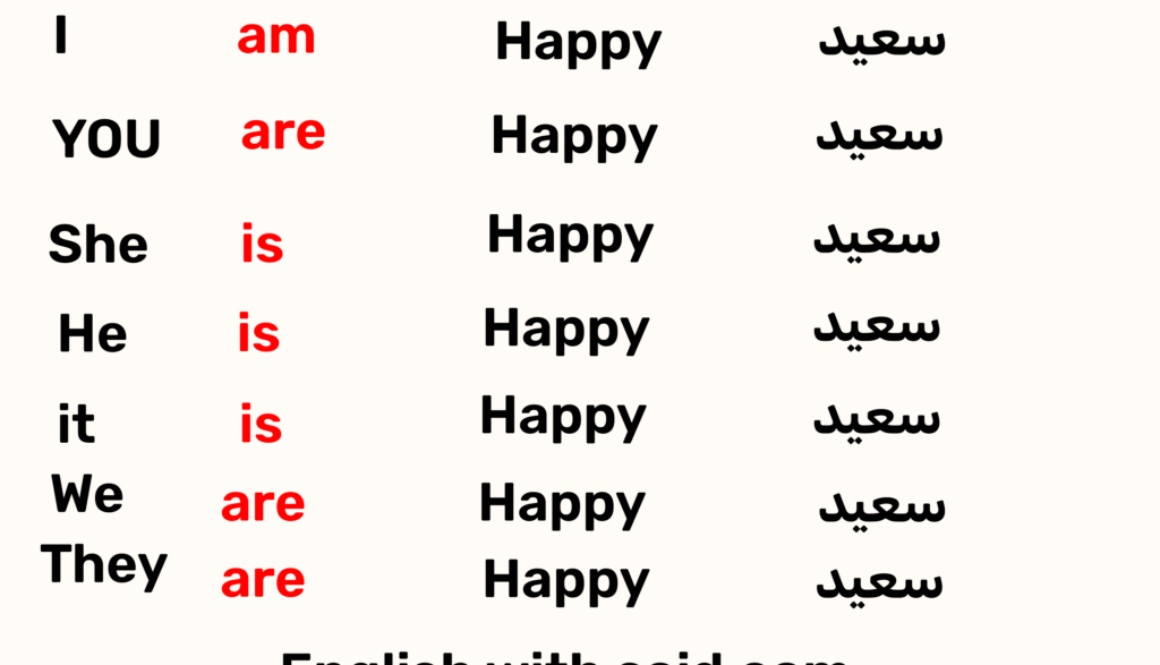
The verb to be is one of the most important verbs in English.
In the present tense, we commonly use:
-
I am
-
You are
-
He is
-
She is
-
It is
-
We are
-
They are
Examples
I am tired.
You are happy.
He is a doctor.
She is my sister.
It is cold.
We are students.
They are at school.
You can also make negative sentences.
I am not tired.
He is not a teacher.
They are not at home.
For beginners, practicing the verb “to be” is very important because it appears in many basic English sentences.
Simple Present Tense for English Beginners
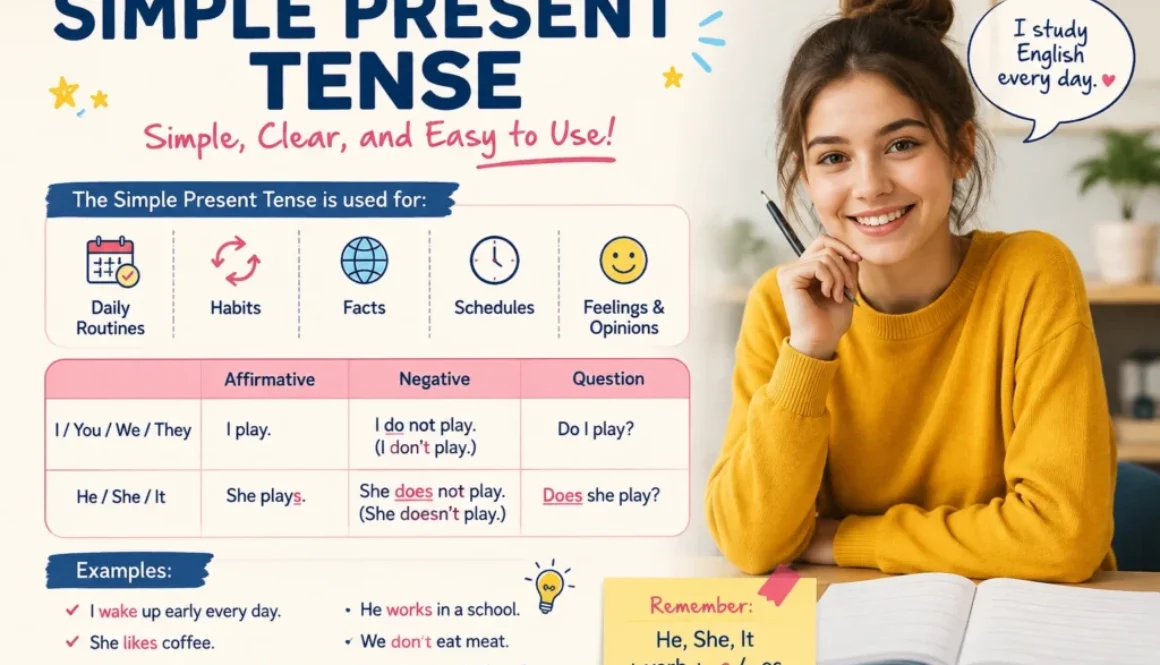
The Simple Present is one of the most useful English tenses. We use it to talk about habits, routines, facts, and things that happen regularly.
Examples
I work every day.
I drink coffee in the morning.
She speaks English.
He plays football.
They live in Morocco.
Notice that with he, she, and it, we usually add -s or -es to the verb.
For example:
I work.
She works.
I play football.
He plays football.
They watch TV.
She watches TV.
Negative Sentences
We use don’t with I, you, we, and they.
I don’t speak French.
They don’t work on Sunday.
We use doesn’t with he, she, and it.
He doesn’t speak Spanish.
She doesn’t like coffee.
This is an important grammar point for English beginners.
Useful English Sentences for Daily Life
Learning complete sentences can be more useful than memorizing individual words.
Here are some common English sentences for beginners:
I am hungry.
I am thirsty.
I am tired.
I am busy.
I am ready.
I don’t know.
I don’t understand.
Please speak slowly.
Can you repeat that?
What does this mean?
How do you say this in English?
Where are you from?
What is your name?
How old are you?
What do you do?
Where do you live?
Try to use these sentences every day. Repetition is one of the best ways to remember new English expressions.
English Vocabulary for Everyday Activities
Beginners should learn vocabulary related to daily activities.
Here are some common verbs:
-
Wake up
-
Get up
-
Eat
-
Drink
-
Work
-
Study
-
Read
-
Write
-
Walk
-
Run
-
Cook
-
Clean
-
Drive
-
Watch
-
Listen
-
Sleep
Example Paragraph
I wake up at seven o’clock. I get up and have breakfast. Then, I go to work. I work in the morning. In the afternoon, I come home and have lunch. In the evening, I watch TV and read a book. I go to bed at eleven o’clock.
This simple paragraph contains many useful words and expressions for beginners.
How to Improve English Speaking Skills
Many English learners understand grammar and vocabulary but feel nervous when they speak. The best way to improve speaking is to practice speaking regularly.
You do not need a native English speaker to start practicing.
You can speak to yourself.
For example, describe what you are doing:
I am making coffee.
I am sitting in my room.
I am using my phone.
I am going to work.
I am cooking dinner.
You can also describe things around you.
This is my computer.
This is my phone.
The door is open.
The window is closed.
This simple exercise can help you think in English.
How to Improve English Listening
Listening is another important skill for English beginners. At first, native speakers may sound very fast. Do not worry if you cannot understand everything.
Start with short and simple English content.
You can listen to:
-
Beginner English conversations.
-
Short English stories.
-
English songs.
-
Simple podcasts.
-
English lessons.
-
Videos with subtitles.
Try this simple method:
Step 1: Listen to the sentence.
Step 2: Read the sentence.
Step 3: Listen again.
Step 4: Repeat the sentence aloud.
For example:
I go to work every morning.
Listen to it several times and repeat it until you can say it naturally.
How to Improve English Reading
Reading English every day can help you improve vocabulary, grammar, and sentence structure.
Beginners should start with short and easy texts instead of difficult books.
You can read:
-
Short stories.
-
Simple news articles.
-
English dialogues.
-
Beginner English lessons.
-
Short blog posts.
-
Children’s stories.
When you find a new word, do not stop every few seconds to translate everything. First, try to understand the general meaning from the context.
For example:
Tom is hungry, so he goes to a restaurant and orders a sandwich.
Even if you do not know the word hungry, you may understand its meaning from the sentence.
How to Improve English Writing
Writing is a great way to practice English grammar and vocabulary.
Start by writing simple sentences about yourself.
For example:
My name is Ahmed.
I am 25 years old.
I live in Morocco.
I am a teacher.
I like football.
I enjoy watching movies.
Then, try to combine your sentences into a paragraph.
Example
My name is Ahmed. I am 25 years old. I live in Morocco. I am a teacher. I like learning English and watching movies. I practice English every day because I want to speak English confidently.
As your English improves, you can write longer paragraphs.
Common English Questions for Beginners
Learning questions is essential for everyday communication.
Here are some common questions:
What is your name?
Where are you from?
Where do you live?
What do you do?
What do you like?
What time do you get up?
Do you speak English?
Do you like coffee?
Where are you going?
What are you doing?
Example Conversation
A: Where are you from?
B: I’m from Morocco.
A: What do you do?
B: I’m a teacher.
A: Do you speak English?
B: Yes, I do.
Short conversations like this are perfect for practicing English speaking.
English for Beginners: Learn English Every Day
One of the biggest mistakes beginners make is studying English only once or twice a week.
You do not need to study for five hours every day. Even 20 to 30 minutes a day can be useful if you practice consistently.
Here is a simple daily English routine:
5 Minutes: Vocabulary
Learn five new English words.
5 Minutes: Grammar
Study one small grammar point.
10 Minutes: Listening
Listen to a short English conversation or story.
5 Minutes: Speaking
Repeat sentences aloud.
5 Minutes: Writing
Write five sentences about your day.
This routine is simple and realistic for beginners.
Don’t Be Afraid of Making Mistakes
Making mistakes is a normal part of learning English.
You may make mistakes with grammar, pronunciation, vocabulary, or word order. That is completely normal.
For example, a beginner might say:
He go to school every day.
The correct sentence is:
He goes to school every day.
The important thing is to notice the mistake, learn from it, and try again.
Do not wait until your English is perfect before you start speaking. Practice is what helps you become better.
Frequently Asked Questions About Learning English
How can I start learning English as a beginner?
Start with basic vocabulary, common sentences, simple grammar, pronunciation, and everyday conversations. Practice a little every day instead of trying to learn everything at once.
How many English words should a beginner learn?
There is no exact number that every beginner must learn. Focus on common words that you can use in daily conversations, such as family, food, work, home, time, activities, and travel vocabulary.
How can I speak English confidently?
Practice speaking regularly. Read sentences aloud, repeat conversations, describe your daily activities, and do not be afraid of making mistakes.
Can I learn English by myself?
Yes. You can learn many English skills by yourself using books, videos, podcasts, websites, stories, and regular speaking and writing practice.
How long does it take to learn English?
The time depends on your starting level, goals, study habits, and how often you practice. Consistent daily practice can help you make steady progress.
Final Thoughts: Start Your English Learning Journey Today
Learning English for beginners does not have to be complicated. Start with simple words, useful sentences, basic grammar, and everyday conversations.
Do not try to memorize everything in one day. Learn a few new words, practice a few sentences, listen to English, and speak as much as possible.
Remember:
Learn a little.
Practice every day.
Make mistakes.
Learn from your mistakes.
Keep going.
With regular practice and patience, your English can improve step by step.
If you are a beginner, start today with just five new words and five simple English sentences. Tomorrow, learn five more. After a few weeks, you will have a much stronger foundation in English.
Your English journey starts with one simple sentence:
“I can learn English.” 🇬🇧📚💪