
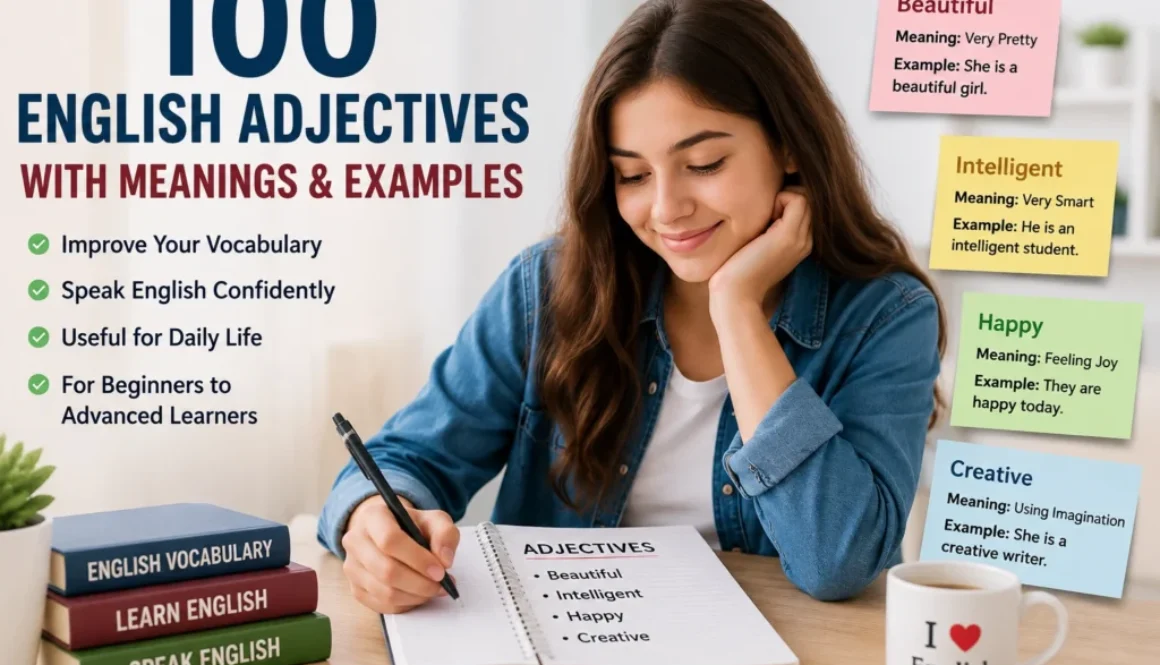
100 English Adjectives with Meanings and Examples | Complete Vocabulary Guide
100 English Adjectives with Meanings and Examples
Learning English adjectives is one of the best ways to improve your English vocabulary and speaking skills. Adjectives help us describe people, places, things, emotions, and situations. Without adjectives, English sentences can sound boring and unclear.
For example:
- “The car is fast.”
- “She is happy.”
- “It was a beautiful day.”
In this complete English vocabulary guide, you will learn 100 common English adjectives with meanings and easy examples. These adjectives are very useful for daily English conversation, writing, reading, and speaking practice.
This article is perfect for:
- English beginners
- Intermediate English learners
- ESL students
- English teachers
- Anyone who wants to improve English vocabulary
What Are English Adjectives?
An adjective is a word that describes a noun or pronoun.
Examples:
- A tall man
- A beautiful house
- A cold drink
Adjectives make sentences more interesting and detailed.
Why Are Adjectives Important in English?
Learning adjectives helps you:
- Speak English more clearly
- Describe people and things better
- Improve your English writing
- Understand movies and books easily
- Sound more natural in conversations
Using adjectives correctly can make your English sound fluent and professional.
100 English Adjectives with Meanings and Examples
1. Happy
Meaning: Feeling good or joyful.
Example: She feels happy today.
2. Sad
Meaning: Feeling unhappy.
Example: He looked sad after the movie.
3. Big
Meaning: Large in size.
Example: They live in a big house.
4. Small
Meaning: Little in size.
Example: I have a small bag.
5. Beautiful
Meaning: Very attractive.
Example: The garden is beautiful.
6. Ugly
Meaning: Not attractive.
Example: The old building looked ugly.
7. Fast
Meaning: Moving quickly.
Example: His car is very fast.
8. Slow
Meaning: Moving without speed.
Example: The turtle is slow.
9. Hot
Meaning: Having high temperature.
Example: The coffee is hot.
10. Cold
Meaning: Having low temperature.
Example: It is cold outside.
11. Friendly
Meaning: Kind and pleasant.
Example: Our neighbors are friendly.
12. Angry
Meaning: Feeling mad.
Example: My teacher was angry.
13. Tall
Meaning: Having great height.
Example: Her brother is tall.
14. Short
Meaning: Not tall.
Example: He is short but strong.
15. Strong
Meaning: Having power.
Example: The man is very strong.
16. Weak
Meaning: Not strong.
Example: She felt weak after being sick.
17. Rich
Meaning: Having a lot of money.
Example: The businessman is rich.
18. Poor
Meaning: Not having much money.
Example: The family was poor.
19. Clean
Meaning: Not dirty.
Example: The room is clean.
20. Dirty
Meaning: Not clean.
Example: His shoes are dirty.
21. Easy
Meaning: Not difficult.
Example: English becomes easy with practice.
22. Difficult
Meaning: Hard to do.
Example: This test is difficult.
23. Smart
Meaning: Intelligent.
Example: She is a smart student.
24. Stupid
Meaning: Not intelligent.
Example: That was a stupid mistake.
25. Brave
Meaning: Showing courage.
Example: The firefighter was brave.
26. Scared
Meaning: Afraid.
Example: The child was scared.
27. Young
Meaning: Not old.
Example: She is very young.
28. Old
Meaning: Advanced in age.
Example: My grandfather is old.
29. New
Meaning: Recently made.
Example: I bought a new phone.
30. Old-Fashioned
Meaning: Not modern.
Example: That dress looks old-fashioned.
31. Soft
Meaning: Not hard.
Example: This pillow is soft.
32. Hard
Meaning: Solid or difficult.
Example: The table is hard.
33. Sweet
Meaning: Sugary or kind.
Example: She has a sweet voice.
34. Bitter
Meaning: Sharp taste.
Example: The medicine tastes bitter.
35. Loud
Meaning: Making a lot of noise.
Example: The music is loud.
36. Quiet
Meaning: Not noisy.
Example: The library is quiet.
37. Busy
Meaning: Having many things to do.
Example: I am busy today.
38. Lazy
Meaning: Not wanting to work.
Example: He is lazy on weekends.
39. Polite
Meaning: Showing good manners.
Example: The waiter was polite.
40. Rude
Meaning: Not polite.
Example: His reply was rude.
41. Honest
Meaning: Truthful.
Example: She is an honest person.
42. Dishonest
Meaning: Not truthful.
Example: The salesman was dishonest.
43. Funny
Meaning: Making people laugh.
Example: That comedian is funny.
44. Serious
Meaning: Not joking.
Example: He looked serious during the meeting.
45. Calm
Meaning: Relaxed and peaceful.
Example: The sea is calm today.
46. Nervous
Meaning: Worried or anxious.
Example: I feel nervous before exams.
47. Famous
Meaning: Known by many people.
Example: She is a famous singer.
48. Popular
Meaning: Liked by many people.
Example: This restaurant is popular.
49. Lonely
Meaning: Feeling alone.
Example: The old man felt lonely.
50. Excited
Meaning: Very happy and enthusiastic.
Example: The children are excited.
More Useful English Adjectives
Here are more important adjectives for daily English:
- Careful
- Careless
- Expensive
- Cheap
- Comfortable
- Uncomfortable
- Delicious
- Terrible
- Wonderful
- Amazing
- Interesting
- Boring
- Dangerous
- Safe
- Healthy
- Sick
- Heavy
- Light
- Noisy
- Silent
- Modern
- Traditional
- Strong
- Weak
- Helpful
- Useless
- Perfect
- Imperfect
- Fresh
- Dry
- Wet
- Bright
- Dark
- Lucky
- Unlucky
- Friendly
- Cruel
- Generous
- Mean
- Proud
- Shy
- Clever
- Foolish
- Patient
- Impatient
- Curious
- Creative
- Successful
- Independent
- Responsible
How to Learn English Adjectives Fast
1. Practice Every Day
Use adjectives in daily conversations.
Example:
- “Today is beautiful.”
- “My bag is heavy.”
2. Learn Adjectives in Sentences
Do not memorize words alone. Learn complete sentences.
Example:
- “She is very kind.”
- “The movie was exciting.”
3. Watch English Videos
Movies and YouTube videos help you hear adjectives naturally.
4. Read English Stories
Reading stories improves vocabulary quickly.
Common Mistakes with English Adjectives
Using Too Many Adjectives
Wrong:
- She has a beautiful amazing wonderful bag.
Correct:
- She has a beautiful bag.
Confusing Adjectives and Adverbs
Wrong:
- He runs quick.
Correct:
- He runs quickly.
Conclusion
Learning English adjectives is very important for improving your English vocabulary, speaking, and writing skills. Adjectives help you describe the world clearly and confidently.
By practicing these 100 English adjectives every day, you will become more fluent and natural in English conversations.
Try to use new adjectives when speaking with friends, writing sentences, or practicing English online. Small daily practice can bring big improvement.